How Estate Agents Can Help Sellers Recover Value Before a Property Sale
Helping sellers recover value before a property sale is one of the simplest ways an estate agent can protect a client’s final price. Old outbuildings, dated fittings and leftover building materials don’t have to end up in a skip — most of them can be turned into cash.
If you list properties that need clearing, renovating or demolishing before they go to market, this guide shows you how to refer sellers for salvage, removal, demolition and material sales. Protector Build operates two yards in Gauteng, buying and selling second-hand building materials and running its own in-house demolition and salvage team across Pretoria, Midrand and beyond.
Table of Contents
Why Sellers Should Recover Value Before a Property Sale
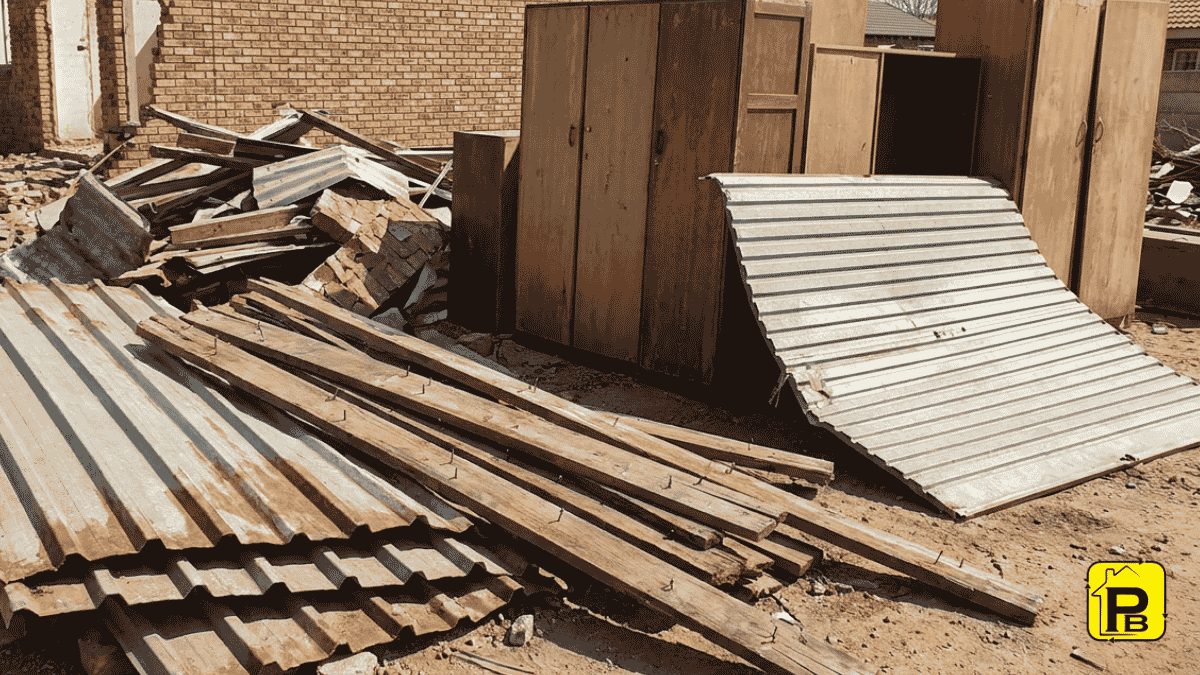
Most sellers focus on the asking price and forget what is sitting in the backyard. A collapsing wendy house, an old boundary wall, a stack of leftover roof sheets or a bathroom that is about to be ripped out all carry resale value — but only until they are broken up and dumped.
When a seller chooses to recover value before a property sale, three things happen. The cost of clearing the site drops, the property photographs better, and the seller walks away with money they would otherwise have thrown away. For you as the agent, that means a cleaner listing, a happier client and a smoother path to transfer.
What Is Worth Recovering From a Property
Not every item has resale value, but a surprising amount does. Common recoverable items include:
- Face bricks, stock bricks, clinker bricks and pavers
- IBR, corrugated and Chromadek roof sheets in reasonable condition
- Clay and concrete roof tiles
- Solid wood doors, timber window frames and aluminium windows
- Structural timber, roof trusses and hardwood floorboards
- Cast iron baths, pedestal basins and brass fittings
- Steel gates, burglar bars, palisade fencing and steel beams
What Is Not Worth Recovering
Be honest with sellers about what has little or no value, so expectations stay realistic:
- Broken or heavily rusted roof sheets and cracked bricks
- Hollow-core MDF doors and acrylic baths
- Rotten timber and damaged tiles
- Anything containing asbestos — this is a safety issue, not a salvage item (see the compliance section below)
5 Ways Estate Agents Can Help Sellers Recover Value Before a Property Sale
You don’t need to become a demolition expert. You only need to know when to ask the question and who to call.
Spot Recoverable Materials During the Valuation
When you walk through a property for the first time, note anything that is old, unwanted or about to be removed. Take photos of outbuildings, roofing, doors, windows, bathrooms and stacked materials. Photos are usually all a salvage buyer needs to give an indication of value.
Refer Salvage and Removal Before You List
Clearing a property before it goes on the market makes photos and viewings far better, so refer the seller to a salvage buyer early. With Protector Build, the seller makes contact, the team evaluates the items and sends a no-obligation offer by email or WhatsApp. If the seller accepts, collection can be arranged for qualifying materials, or the seller can drop items off at the yard.
Use Demolition When a Structure Is Hurting the Sale
Some buildings put buyers off — a derelict outbuilding, an unsafe structure or a boundary wall that is beyond repair. In these cases, demolition can add more value than it costs. Protector Build runs an in-house demolition and salvage service with no third-party contractors, and the value of the materials recovered is offset against the demolition cost.
Turn Leftover Materials Into Cash
Sellers who renovate before listing often end up with leftover bricks, roof sheets, tiles and timber. Instead of paying for a skip, they can sell the surplus. That cash helps cover repairs and cosmetic upgrades, which is a practical way to recover value before a property sale without stretching the seller’s budget.
Keep the Sale on Schedule
Timing matters. Buyers, banks and transfer attorneys all work to deadlines, and a site that isn’t cleared on time can delay occupation. Ask for salvage and demolition to be arranged before the offer to purchase is signed, and get the dates confirmed in writing. Once materials are broken up or mixed with rubble, their value drops sharply.
Before You Start: Disclosure, Permits and Asbestos
A few compliance points protect both you and the seller as you work to recover value before a property sale. Raise them early.
Disclose the property’s condition honestly.
Under Section 67 of the Property Practitioners Act, a property practitioner may not accept a mandate unless the seller has provided a fully completed and signed mandatory disclosure form. If a structure was removed or a defect was repaired, make sure the form reflects the property’s condition accurately. Your conveyancer can confirm the details.
Check demolition approval.
Demolition work falls under the National Building Regulations, so the local municipality’s building control office should be consulted before any structure comes down. Protector Build obtains the necessary permits as part of its demolition service.
Treat asbestos separately.
Many older roofs, ceilings and sheets in South Africa are made of asbestos cement. Asbestos is not salvage. Under the Asbestos Abatement Regulations, 2020, asbestos-containing material must be assessed and, depending on the quantity and condition, handled by a registered asbestos contractor. If you suspect it, tell the seller before any work starts.
A Simple Decision Guide for Estate Agents
Use this table to decide the best route for each listing:
| Seller situation | Best route |
|---|---|
| Property cluttered with usable materials, seller wants it cleared before photos | Refer for salvage and removal |
| Derelict outbuilding, wendy house or boundary wall putting buyers off | Arrange demolition with the salvage value offset |
| Seller renovating before listing, with surplus bricks, tiles or roof sheets | Sell the surplus to a salvage yard |
| Whole structure to be cleared for a developer or vacant-land sale | Combine demolition, rubble removal and site clearing |
| Unsure what has value | Send photos for a no-obligation assessment |
How Protector Build Works With Estate Agents
Protector Build is a Gauteng second-hand building materials dealer with two yards and an in-house demolition team. Agents refer clients who need materials removed, a structure taken down or surplus stock sold — and who want to recover value before a property sale. The team can help with:
- Salvage and material buying — evaluation and a no-obligation offer. See our salvage building materials service in Gauteng
- Demolition — residential, industrial and office buildings, with salvage value offset against the cost. See our demolition services in Midrand and Pretoria
- Site clearing — rubble removal, tree felling and topsoil removal
- First-level project management — one point of contact from the first site visit to a cleared property
- Second-hand sales — sellers can also buy affordable replacement materials from the yards
Want more detail on what sells? Read our guides on how to sell surplus building materials for cash in Gauteng and which building materials are worth saving before you demolish.
Frequently Asked Questions
Can estate agents refer clients to Protector Build for salvage and demolition?
Yes. Protector Build works with estate agents, homeowners, developers and business owners. Send photos and a short description to the nearest branch and the team will advise on the next step.
How can a seller recover value before a property sale without renovating?
Look beyond the house. Outbuildings, carports, boundary walls, old roof sheets, paving and fittings can all carry value. Photos of each area are enough to start the conversation.
Does demolition cost more than the materials are worth?
It depends on the structure, but Protector Build offsets the value of the materials it recovers against the demolition cost, which reduces what the seller pays. Request a free, no-obligation quote to see the numbers.
What if the roof sheets contain asbestos?
Asbestos is not salvage. Get it assessed and use a registered asbestos contractor, as required by the Asbestos Abatement Regulations, 2020. Other materials on the property can still be assessed for salvage.
What should I send to get an offer?
Photos of the materials or structure, the suburb, approximate quantities and the seller’s timeline. Send them by WhatsApp or email to the nearest branch. Pretoria: 082 718 0405. Midrand: 079 657 9427.
Which areas does Protector Build serve?
Midrand, Pretoria, Centurion, Johannesburg North, the West Rand and the wider Gauteng region.
Visit Both Protector Build Branches in Gauteng
Protector Build Pretoria (Wonderboom / Annlin)
19 Linvelt Road, Annlin, Pretoria 0066
082 718 0405
adminwb@protectorbuild.co.za
facebook.com/profile.php?id=61566604930268
Protector Build Midrand
1 Allan Road, Glen Austin, Midrand
079 657 9427
adminmr@protectorbuild.co.za
facebook.com/profile.php?id=61567038775839
Open Monday to Saturday. Walk in, call ahead or send photos via WhatsApp — the team will help you and your seller work out the best way to recover value before a property sale.
Planning a clear-out before listing? Read: How to Arrange Material Recovery, Sell Salvaged Items, or Buy Replacement Building Materials